
Where community takes root
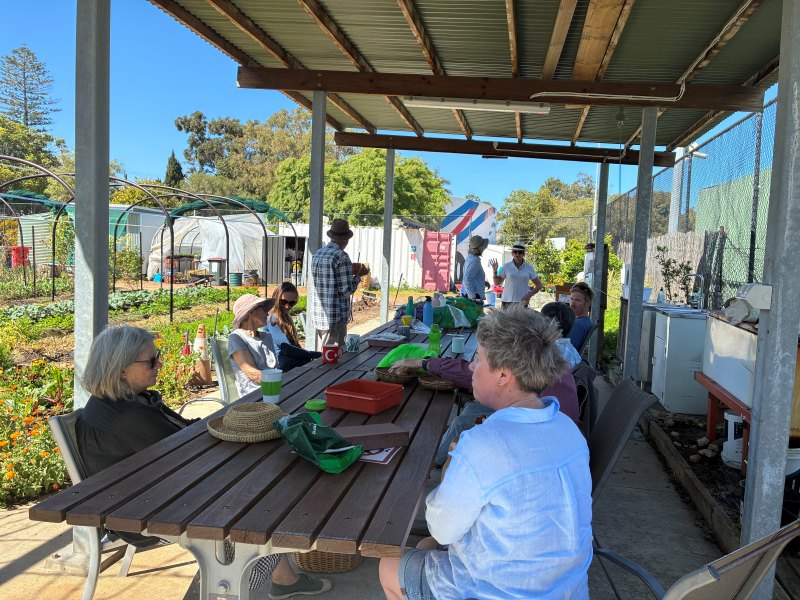
North Fremantle Social Farm (NFSF) is a community-led urban micro-farm in Walyalup/ North Fremantle. For seven years, members, volunteers and neighbours have grown food and community side by side. Its philosophy is simple: Grow. Learn. Connect.
Over 12 months, ShiftLab, Anglicare WA's Innovation hub, worked with the Farm to capture how it works. The result is Growing a Social Farm, a practical guide for community groups, council, funders and practitioners.
How we got involved
Originally developed through the Growing Change project in 2016, the site was re-established in 2019 as North Fremantle Social Farm with a community-centred membership model and has since evolved as a thriving local community hub. At the Farm, members can harvest food, volunteers help cultivate crops, and the wider community join in workshops, events and collaborations.
North Fremantle Social Farm came to the attention of the ShiftLab team as an innovative and unique local solution to poverty. After an initial tour of the Farm, it was identified as a possible service model for Anglicare WA. The team at the Farm wanted to grow beyond one site, but much of what made it work had never been written down. So, we set out to codify it, documenting its unwritten ways of working as a clear and shareable model.
Our approach
From 2025 to 2026, we worked alongside North Fremantle Social Farm's volunteer Board and their Farm & Volunteer Manager, Amy Warne.
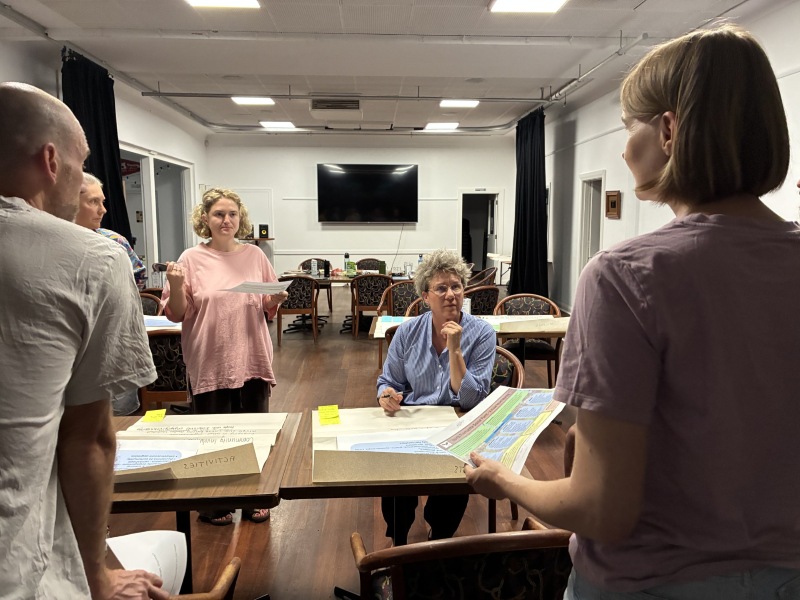
We reviewed the Farm's existing documents, ran collaborative workshops and interviews, and spent time on site.
Through this exploration, the team was looking to identify:
- The design principles behind the model
- The conditions it needs to succeed
- How it creates social impact
- What keeps it financially sustainable
- What could transfer to other communities
What we learned
The key learnings weren't about the act of farming itself, the Farm succeeds because it nurtures connection between people.
Relationship come first. Trust, belonging and psychological safety are the true drivers of the model. Acts of connection underpin the everyday experiences – volunteering, food sharing, events and collaborations. The Farm's morning tea break came up again and again as one of its most important social practices on site.
Skilled stewardship matters. The research highlighted the critical role of the Farm & Volunteer Manager. Success depends as much on relational leadership as it does on horticultural expertise.
Simplicity builds resilience. By focusing on vegetable growing rather than diversifying into chickens, orchards or strict permaculture practices, the Farm is able to remain approachable and easy to join.
Enterprise sustains impact. One of the most significant findings was the Farm's sustainable enterprise model. Approximately 200 picking memberships fund a paid Farm & Volunteer Manager role. Sponsorships and grants cover infrastructure improvements and special projects.
The outcomes so far
The result of the codification work accumulated into Growing a Social Farm, a guide capturing the principles, conditions and systems that have enabled the Farm to flourish. This provides a model for further micro-farm sites that can function as a vehicle for social connection, learning, mental health wellbeing, and community resilience.
The strength of the model has not gone unnoticed. Following the codification work and increased reputation, the Farm has been nominated for a Fremantle Business Award in the Sustainable Enterprise category, recognised for its unique ability to combine financial sustainability, environmental stewardship and community impact.
North Fremantle Social Farm has established itself as a platform for community leaderships and micro-enterprises such as Little Pantry. Volunteers describe gaining confidence, practical skills and friendships that reach well beyond the Farm.


